


July 9, 2026
UV400 is one of the most important features to look for when shopping for sunglasses, but many people don't know what it actually means. Learn how UV400 protects your eyes, why it matters, and how it differs from polarized lenses.
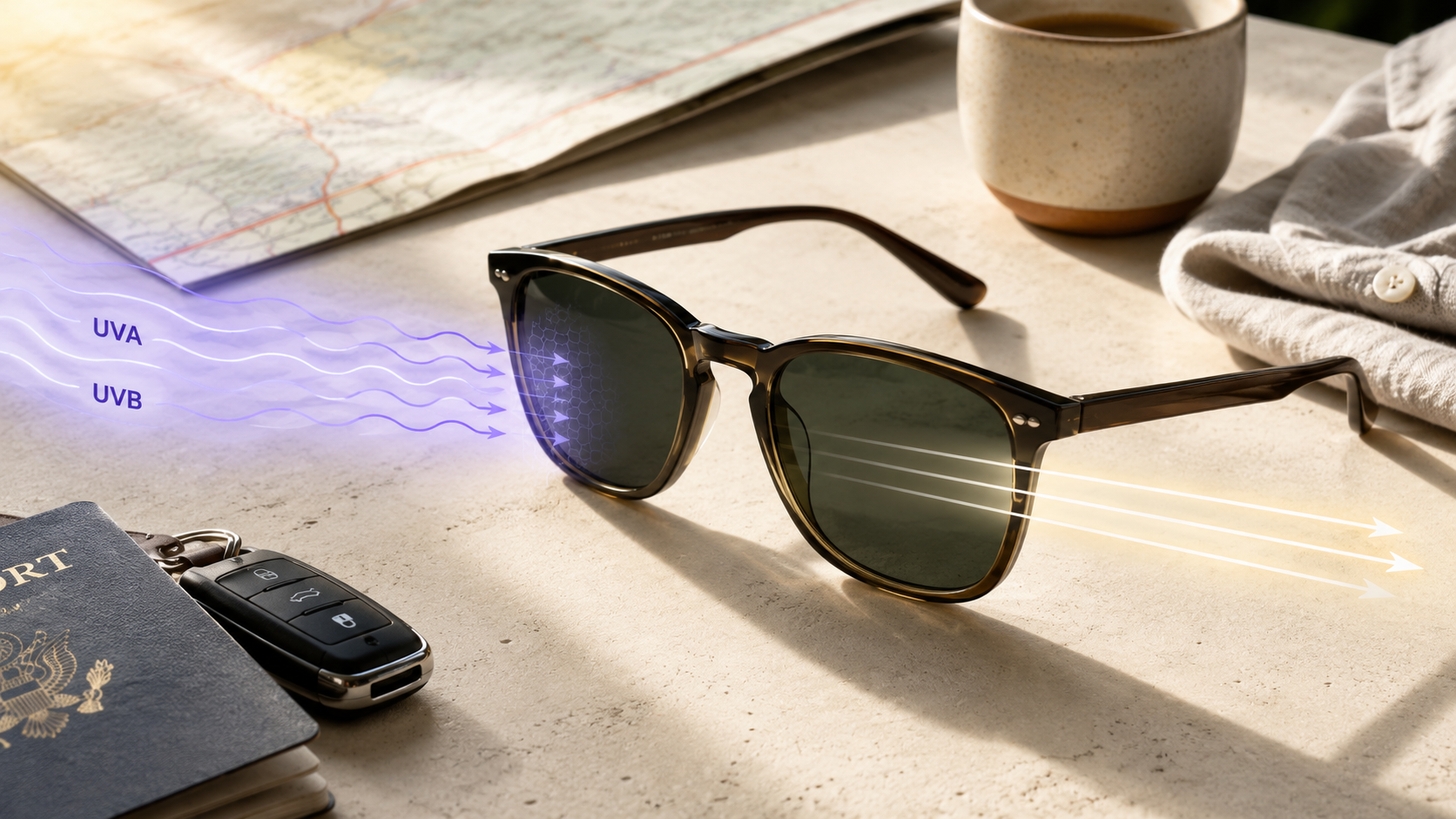
If you've ever shopped for sunglasses, you've probably seen the term UV400 printed on a product tag or listed in the specifications. But what does it actually mean?
It's one of the most important features to look for in a quality pair of sunglasses, yet it's also one of the most misunderstood. Some people think it refers to how dark the lenses are, while others assume it's simply a marketing term.
Neither is true.
Understanding what UV400 means can help you make a more informed decision and, more importantly, help protect your eyes every time you step outside.
UV400 means your sunglasses block ultraviolet (UV) light with wavelengths up to 400 nanometers. In practical terms, that means they block virtually 100% of harmful UVA and UVB rays that reach the Earth's surface.
Whether you're driving to work, spending a day on the water, traveling, or simply enjoying time outdoors, UV400 protection is one of the most important features your sunglasses should offer.
Ultraviolet light is invisible to the human eye, but that doesn't mean it can't cause damage. Over time, prolonged exposure to UV radiation has been linked to several eye conditions, including cataracts, photokeratitis (often described as a sunburn of the eye), and other forms of long-term eye damage.
UV light is measured in nanometers, and ultraviolet radiation falls within the 100 to 400 nanometer range. When sunglasses are labeled UV400, it means they are designed to block ultraviolet light all the way up to 400 nanometers, covering virtually all UVA and UVB rays.
In other words, UV400 isn't about making your vision darker. It's about protecting your eyes from harmful radiation.
Your skin isn't the only part of your body affected by the sun. Your eyes are exposed every time you're outdoors, even on cloudy days.
Many people associate sunglasses with comfort, reducing brightness, or minimizing glare. Those are certainly benefits, but their most important job is protecting your eyes from ultraviolet exposure.
Long-term UV exposure has been associated with:
Quality sunglasses can't eliminate every risk, but wearing lenses with proper UV protection is one of the easiest ways to reduce unnecessary exposure.
No.
This is probably the biggest misconception about sunglasses.
A dark lens doesn't automatically provide UV protection. In fact, inexpensive fashion sunglasses with heavily tinted lenses but poor UV protection may actually be worse than wearing no sunglasses at all.
Here's why.
When your eyes are behind a dark lens, your pupils naturally dilate to let in more light. If those lenses don't block ultraviolet radiation, your eyes may actually receive more UV exposure than they would without sunglasses.
The color or darkness of a lens has very little to do with its ability to block harmful UV rays.
That's why it's always important to look for UV400 or 100% UV Protection, regardless of how light or dark the lenses appear.
This is another common source of confusion.
Although they're often mentioned together, UV400 and polarized describe two completely different features.
UV400 protects your eyes from harmful ultraviolet radiation.
Polarized lenses reduce glare caused by sunlight reflecting off surfaces like water, roads, snow, and glass.
Many premium sunglasses include both features, but one does not automatically mean the other.
Think of it this way:
Ideally, you'll want both.
Not necessarily.
One of the biggest myths in eyewear is that more expensive sunglasses automatically provide better UV protection.
The truth is that UV protection comes from the lens specifications, not the price tag.
Many affordable sunglasses meet the UV400 standard and provide excellent protection.
Where premium sunglasses often justify their price is in other areas, including:
The key isn't buying the most expensive pair. It's making sure the sunglasses you're purchasing provide certified UV400 protection.
When shopping for sunglasses, look for clear labeling that states:
It's also worth purchasing from reputable eyewear brands and trusted retailers that clearly disclose their lens specifications.
If you're buying sunglasses from an unfamiliar source with little product information, it's worth taking a closer look before assuming they provide adequate protection.
Absolutely.
Children often spend more time outdoors than adults, making proper UV protection just as important, if not more so.
Whether they're at the playground, on the beach, at summer camp, or participating in sports, sunglasses with UV400 protection can help reduce unnecessary UV exposure while encouraging healthy habits from an early age.
In most cases, no.
The UV-blocking properties are generally built into the lens material or incorporated during the manufacturing process. They don't simply disappear with age.
However, if your sunglasses become badly scratched, cracked, or otherwise damaged, it's a good idea to replace them. While minor scratches don't necessarily remove UV protection, damaged lenses can affect visual clarity and overall performance.
UV400 is a standard indicating that sunglass lenses block ultraviolet light up to 400 nanometers, protecting your eyes from virtually all harmful UVA and UVB rays.
No. UV400 refers to ultraviolet protection, while polarized lenses reduce glare from reflective surfaces. They're different technologies, and many quality sunglasses include both.
Not necessarily. UV protection depends on the lens specifications rather than the price. Many affordable sunglasses provide full UV400 protection.
Yes. UV protection has nothing to do with lens tint. Even completely clear lenses can provide full UV400 protection if they're manufactured to do so.
Yes. Ultraviolet rays can penetrate cloud cover, so your eyes are still exposed even when the sun isn't shining brightly.
Style, fit, and comfort all play an important role when choosing sunglasses, but UV protection should never be overlooked.
A quality pair of UV400 sunglasses helps protect your eyes from virtually all harmful ultraviolet radiation while allowing you to enjoy everyday activities with greater confidence and comfort.
Whether you're heading to the beach, driving across town, hiking a trail, or enjoying a weekend outdoors, understanding what UV400 means is one of the simplest ways to make a smarter eyewear decision.
At Select Shades, we believe great sunglasses should do more than look good. They should help protect your vision for years to come. That's why understanding features like UV400 is just as important as choosing a style you'll love to wear.
Need Help Choosing the Right Sunglasses?
The team at Select Shades has been helping customers find the perfect pair for decades. Whether you have questions about lens technology, fit, polarization, UV protection, or finding a style that complements your face shape, we're here to help.
Visit a Select Shades store or explore our online collection today.
July 9, 2026
UV400 is one of the most important features to look for when shopping for sunglasses, but many people don't know what it actually means. Learn how UV400 protects your eyes, why it matters, and how it differs from polarized lenses.
January 23, 2026
In 2026, sunglasses are more than an accessory—they’re a wellness tool. Explore how intentional design, lens technology, and modern eyewear support clarity, presence, and everyday balance.

November 6, 2025
Looking for a holiday gift that’s stylish, practical, and personal? This year’s top sunglasses trends make the perfect present for everyone on your list. From bold oversized frames to eco-friendly favorites, discover how to find a pair that shines just as bright as the person you’re gifting.
.png)


